community/locally-led: all sectors and settings
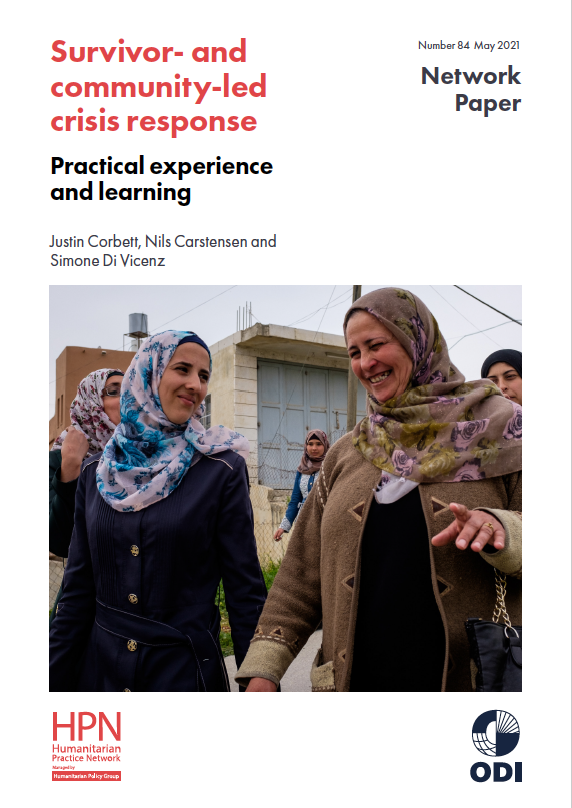
Survivor- and community-led crisis response: practical experience and learning
Published: 2021
Author: Justin Corbett, Nils Carstensen and Simone Di Vicenz for The Humanitarian Practice Network at ODI
“This Network Paper introduces and explains existing knowledge and experience with an emerging way of working in humanitarian programming. For now, we call this approach ‘survivor- and community-led crisis response’ or ‘sclr’, as it seeks to enable external aid actors to connect with, support and strengthen crisis responses identified, designed, implemented and monitored by existing or new self-help groups among crisis-affected populations.”
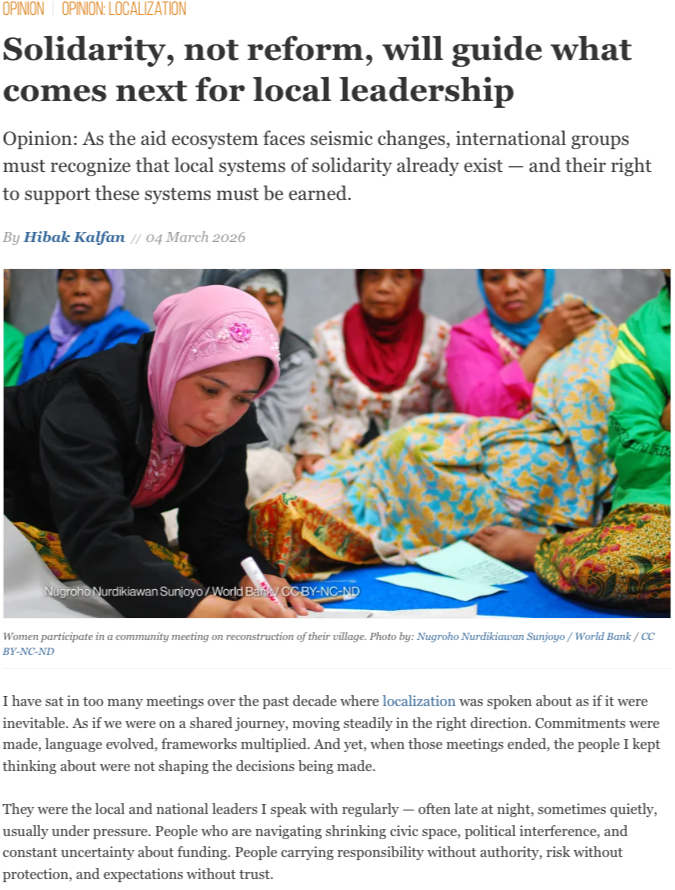
Opinion: Solidarity, not reform, will guide what comes next for local leadership
Published: March 2026
Author: Hibak Kalfan, Devex
“As the aid ecosystem faces seismic changes, international groups must recognize that local systems of solidarity already exist — and their right to support these systems must be earned.”
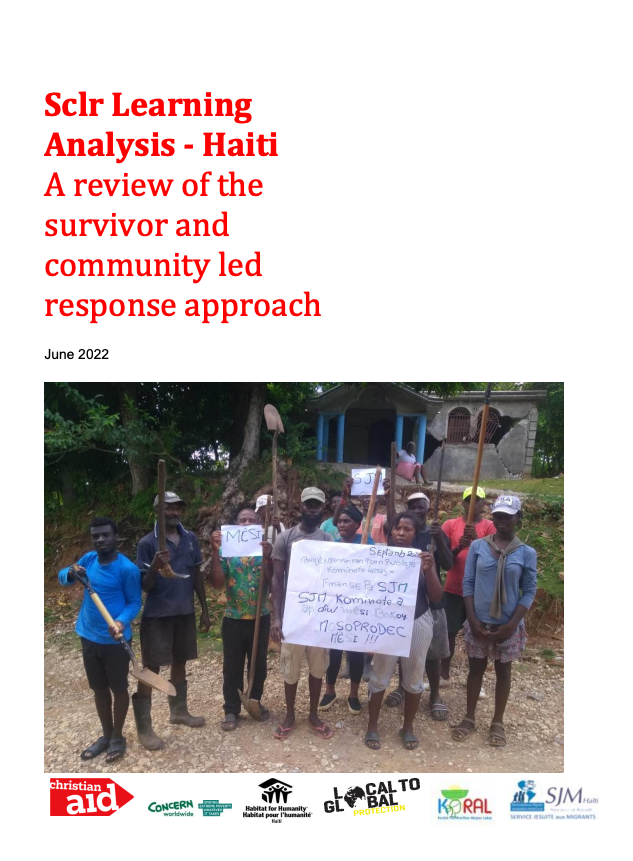
Sclr Learning Analysis – Haiti A review of the survivor and community led response approach
Published: 2022
Author: Jessica Dolcy and Duquesne Prophete for Christian Aid
“On Saturday 14th August 2021 a 7.2 magnitude earthquake struck southwestern Haiti with devastating consequences. Christian Aid worked with local partner organisations Konbite pou Ranfose Aksyon Lakay (KORAL) and Service Jésuites aux Migrants (SJM) to implement the Haiti Earthquake Response which would test the sclr approach at scale for the first time in a complex emergency response in Haiti.”
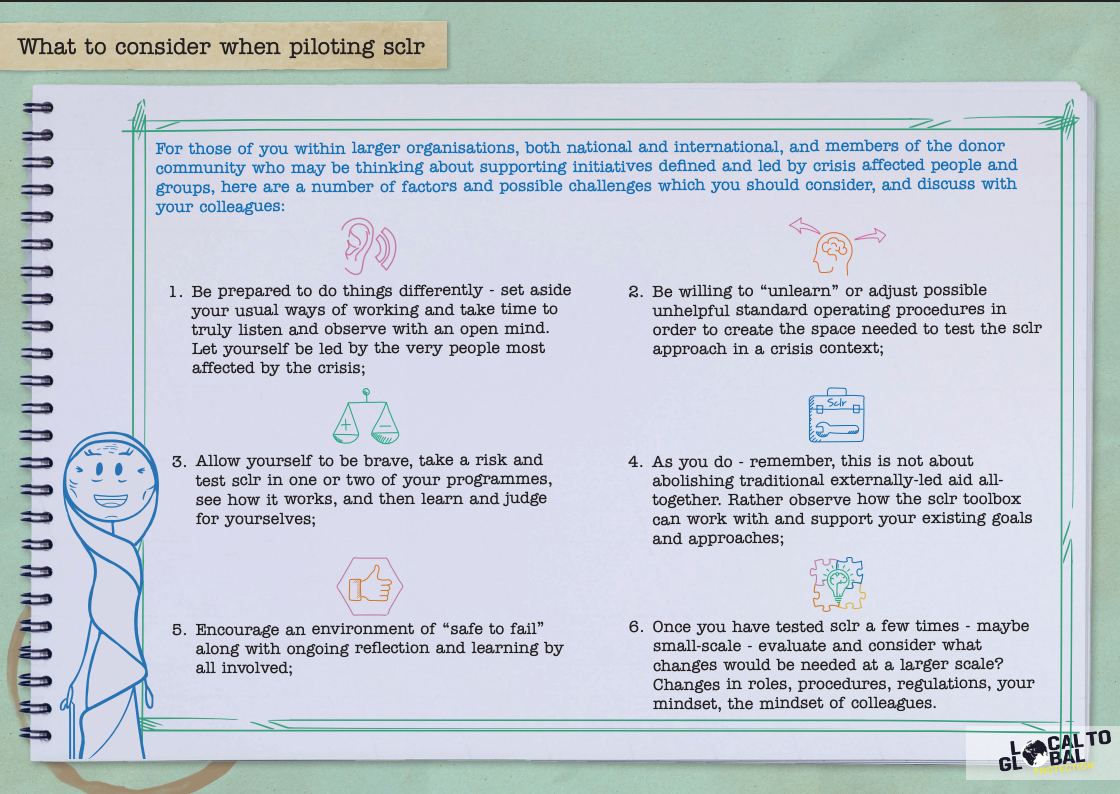
Brief: What to consider when piloting sclr
Published: No date
Author: Local2Global Protection
“For those of you within larger organisations, both national and international, and members of the donor community who may be thinking about supporting initiatives defined and led by crisis affected people and groups, here are a number of factors and possible challenges which you should consider, and discuss with your colleagues.”
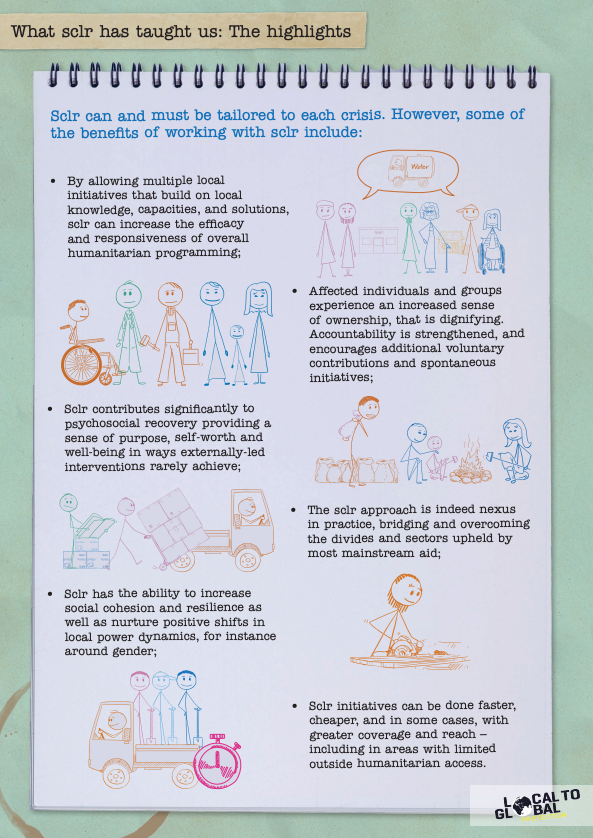
Brief: What sclr has taught us – the highlights
Published: No date
Author: Local2Global Protection
The benefits of working using a sclr approach.
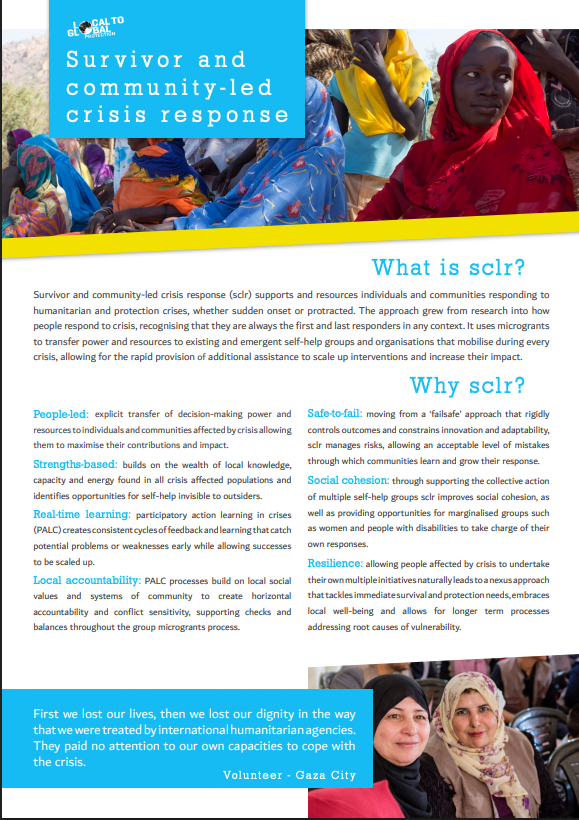
Survivor and Community-led Crisis Response
Published: 2021
Author: Local2Global Protection
“Survivor and community-led crisis response (sclr) supports and resources individuals and communities responding to humanitarian and protection crises, whether sudden onset or protracted. The approach grew from research into how people respond to crisis, recognising that they are always the first and last responders in any context. It uses microgrants to transfer power and resources to existing and emergent self-help groups and organisations that mobilise during every crisis, allowing for the rapid provision of additional assistance to scale up interventions and increase their impact.”
Are we there yet? Localisation as the journey towards locally-led practice: Models, approaches and challenges
Published: 2021
Author: Arbie Baguios, Maia King, Alex Martins and Rose Pinnington for ODI
“Localisation and locally led international development practice has long been discussed, but has still not been delivered. Systemic barriers have posed challenges, and the term itself is contested. Now, the last tumultuous 18 months could provide a critical juncture to finally move forward with this crucial agenda. The pandemic has highlighted structural inequalities in the global system, and disrupted ways of working in the international development sector. The Black Lives Matter movement has brought conversations about racism and colonialism to the fore. And the climate crisis has highlighted the need for global action on humanity’s challenges that remain rooted in local realities.”
Key Insights and Findings from the Global Fund for Children Learning Review: Empowering communities to lead their own development
Published: 2024
Author: GFC and Tostan
“Global Fund for Children (GFC) and Tostan have forged a partnership over the past four years based on their shared commitment to promoting community wellbeing and empowering children, youth, women, and men to lead dignified lives. GFC invests in community-based organizations around the world to help children and youth achieve their full potential and advance their rights while Tostan is an Africa-based organization that works directly with networks of rural communities, empowering them to lead their own development. Tostan’s three-year Community Empowerment Program (CEP) has been instrumental in facilitating community-led initiatives, particularly in the realms of human rights, health, education, livelihoods, and the environment across entire districts. Tostan’s model emphasizes the importance of community ownership and broad civic engagement and results in sustainable and meaningful change.”
Full Spectrum Coalition – Brief
Published: 2025
Author: Full Spectrum Coalition
“The Full Spectrum Coalition (FSC) envisions a world of thriving people and thriving places where community leaders, local collectives, and grassroots organisations lead sustained, multidimensional impact, supported by partnerships that elevate their visions, values, and potential. The FSC creates new partnership opportunities, generates innovative scientific understanding of how Holistic Community-led Development (HCLD) works, and informs better decision-making by funders, practitioners and policymakers. It thus contributes to the civil movement that seeks to uplift HCLD as a powerful, ethical, and sustainable approach to development.”
The Full Spectrum Evidence and Learning Initiative publishes a blog and other articles on Substack: https://fullspectrumeli.substack.com/
Empowering communities to lead their own development: A pathway to sustainable change in Africa
Published: 2025
Author: Ame Atsu David, Global Fund for Children
A blog article on using a community-led approach to focus on girls in rural Sierra Leone.
Northern NGO-centrism in localisation processes: reproducing power inequities in the aid field
Published: 2025
Author: Gijs van Selm et al.
This paper examines the process of discussing and designing actions to tackle power inequities by Northern and Southern NGOs. Drawing on53 interviews with Northern and Southern NGOs, and NNGO networks, we argue that current localisation processes produce a form of cultural capital leveraged by competing Northern NGOs rooted in signalling solidarity with SNGOs and/or communities to donors through rhetorical and symbolic practices, reinforcing their access to and authority oversocial and economic capital as intermediaries.”
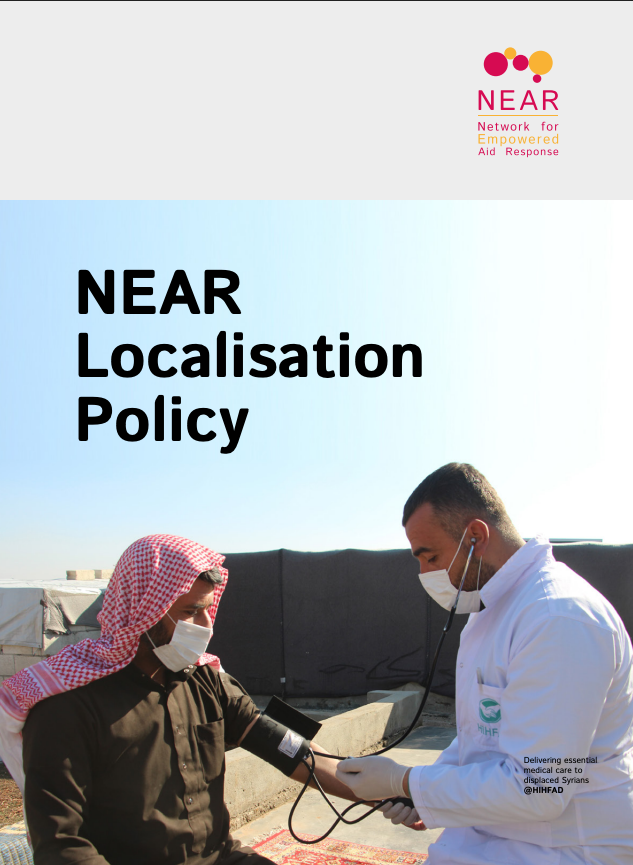
NEAR Localisation Policy
Published: 2025
Author: NEAR
“This policy note outlines NEAR’s position on localisation. Localisation is a central issue for us as it is essential to our vision and our mission. We see localisation as a solution to the current challenges faced by the humanitarian system when responding to the needs of people affected by crises. In this policy note, we set out NEAR’s definition of localisation and the change we believe is necessary to better meet the needs of people in crises.”
Community-Led Innovation Toolkit
Published: 2025
Author: START Network/Community-Led Innovation Partnership (CLIP).
“This toolkit […] distills insights, tools, and practices developed alongside our Hubs, members and partners, offering a practical guide for reflection, decision-making, adaptation and implementation. Designed for both Programme Teams and Community Innovators, the toolkit is deeply aligned with Start Network’s system change approach which can be further explored in our Systems Change Guide.”
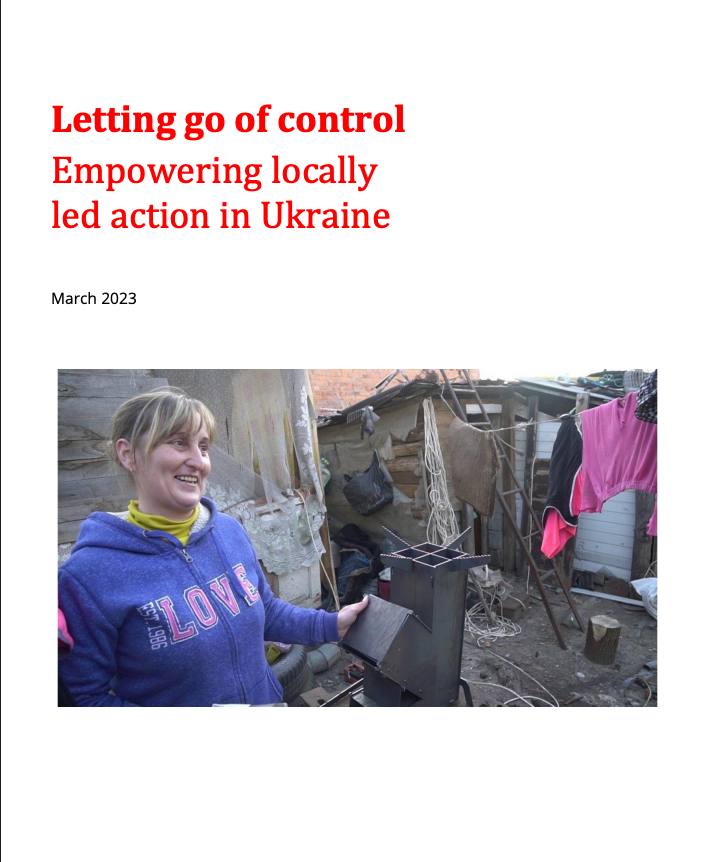
Letting go of control – Empowering locally led action in Ukraine
Published: 2023
Author: Simone Di Vicenz & Elizabeth Hallinan for Christian Aid
“In the first weeks of the war after Russia’s invasion of Ukraine, ordinary people, host communities and spontaneous community groups sprang into action as first responders together with other local actors, including Ukrainian NGOs, church groups and volunteers. These first responders organically formed a humanitarian response based on their own resources and networks, connecting with like-minded helpers and local governments to expand and scale up.”
Voice for Change – Agrarian Communities’ Action Plan on Climate Change
Published: 2015
Author: Praxis Institute for Participatory Practices
Democratising global policy making and processes through participatory research.
What crisis affected communities need from a humanitarian reset
Published: March 2025
Author: Ground Truth Solutions
A guide based on two years of conversations with people on the front lines of crisis. Over two years and across 12 countries, Ground Truth Solutions held more than 34,000 conversations with people experiencing crisis to find out what they want and need humanitarian action to do for them. They offer some clear priorities that should help us navigate this funding crisis.
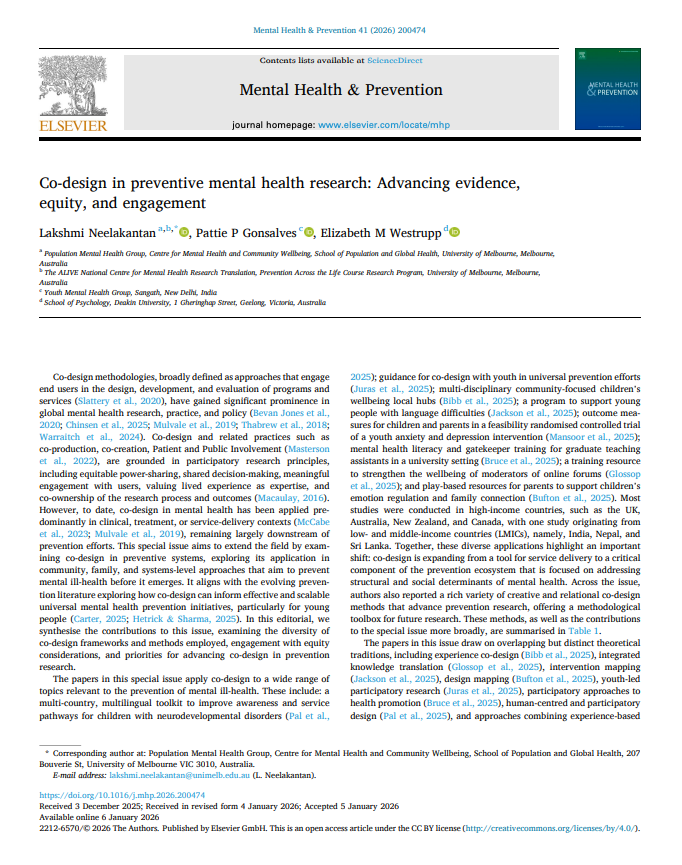
Co-design in preventive mental health research: Advancing evidence, equity, and engagement
Published: 2026
Author: Lakshmi Neelakantan, Pattie P Gonsalves, Elizabeth M Westrupp
“This special issue aims to extend the field by examining co-design in preventive systems, exploring its application in community, family, and systems-level approaches that aim to prevent mental ill-health before it emerges. It aligns with the evolving prevention literature exploring how co-design can inform effective and scalable universal mental health prevention initiatives, particularly for young people (Carter, 2025; Hetrick & Sharma, 2025). In this editorial, we synthesise the contributions to this issue, examining the diversity of co-design frameworks and methods employed, engagement with equity considerations, and priorities for advancing co-design in prevention research.”
Reimagining Scaling: Reflections, Principles, and Perspectives on Scaling Locally-led Humanitarian Innovations
Published: 2025
Author: Community-Led Innovation Partnership (CLIP) & Indigenous & Modern
“This report delves into the complexities of scaling locally-led humanitarian innovation, presenting findings from case studies across five countries: Guatemala, Indonesia, the Philippines, Brazil, and Cameroon. Each case showcases unique perspectives on scaling that depart from traditional, Western frameworks — particularly Silicon Valley-inspired models focused on entrepreneurship. For local innovators, scaling is an organic process that emphasises social impact, community ownership, and contextual adaptation over universal application. This report synthesises these examples to provide recommendations on reimagining scaling from a locally-led, decolonial perspective.”
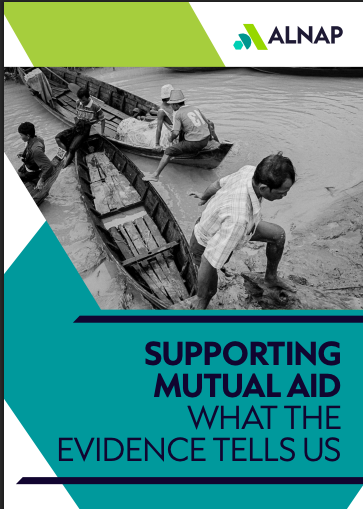
Supporting Mutual Aid – What the Evidence Tells Us
Published: 2025
Author: Posada, A. and Ahimbisibwe, L. for ALNAP/ODI Global
Multi-year research, led by ALNAP in partnership with Local2Global, explores the questions: Could the international system connect to truly locally led efforts? What happens when the conventional humanitarian system engages with and supports informal community-led initiatives?
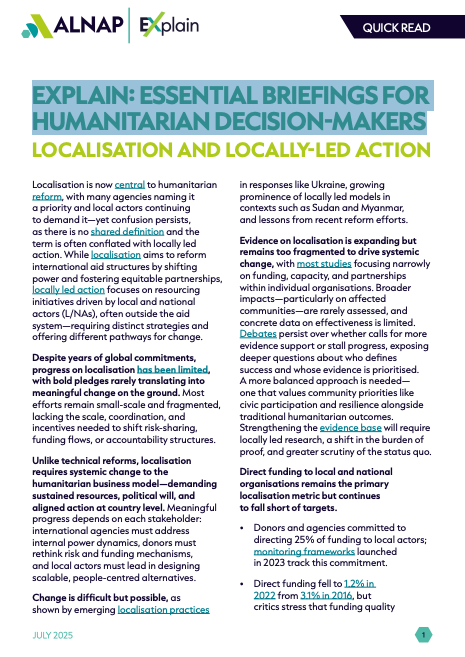
EXPLAIN: Essential briefing for humanitarian decision- makers – localisation and locally-led action
Published: July 2025
Author: Alejandro Posada Bermudez for ALNAP
“Localisation is now central to humanitarian reform, with many agencies naming it a priority and local actors continuing to demand it—yet confusion persists, as there is no shared definition and the term is often conflated with locally led action. While localisation aims to reform international aid structures by shifting power and fostering equitable partnerships, locally led action focuses on resourcing initiatives driven by local and national actors (L/NAs), often outside the aid system—requiring distinct strategies and offering different pathways for change.”.
A very useful brief on power-shifting for localisation but could still go further in terms of including communities themselves.
Building more locally-led aid ecosystems: 2025 insights from Global South civil society. Synthesis of findings.Network for Empowered Aid Response (NEAR)
Published: 2026
Author: Viswanathan, Vijayalakshmi et al.
“Building More Locally-Led Aid Ecosystems is an attempt to bring nuanced insights from Global South civil society on the hopes and struggles of daily realities, as well as their efforts to find a different way forward. Mimicking the realities in which many national and local organisations find themselves, the report looks both within the dominant international system and outside it.”
Building more locally-led aid ecosystems: 2025 insights from Global South civil society. Network for Empowered Aid Response (NEAR).
Published: 2026
Author: Viswanathan, Vijayalakshmi et al.
“Across the sector, localisation has become an accepted idea. It has become the norm for international actors to incorporate country-based expertise into proposals and plans (often at donors’ request); to implement programmes through national and local actors to ensure smooth delivery (with cost-efficiency arguments still often playing a role); and, to a lesser extent, to give visibility to their “local partners”.”
Handbook on Participatory Methods for Community-Based Projects
Published: 2010
Author: Grace Onyango & Miranda Worthen
A guide for programmers and implementers based on the Participatory Action Research project with young mothers and their children in Liberia, Sierra Leone, and Northern Uganda.
How Process Matters in Strengthening MHPSS: A Reflection
Published: 2023
Author: Michael G. Wessells
In developing the IASC Guidelines on Mental Health and Psychosocial Support in Emergency Settings, attention to social process was key for success. A reflection on this process by one of the authors, Michael G. Wessells.

Integrating MHPSS & peace building: a mapping and recommendations for practitioners
Published: 2023
Author: Michael Wessells, PhD. & Raksha Sule
This is the Report of a Consultancy conducted on behalf of the IASC Thematic Working Group on MHPSS & Peacebuilding within the IASC MHPSS Reference Group. The report was shared and discussed widely in four global consultations conducted July-September, 2022 with young people, grassroots practitioners, and policy and thought leaders.
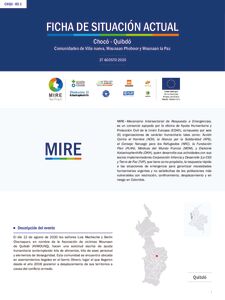
Ficha de situación – Chocó: Quibdó
Published: 2020
Author: MIRE–Mecanismo Intersectorial de Respuesta a Emergencias
Ficha de situación – Chocó: Quibdó. Comunidades de Villa nueva, Wounaan Phoboor y Wounaan la Paz.
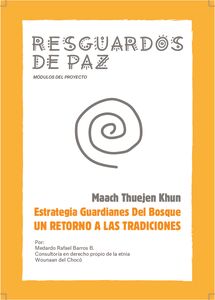
Resguardos De Paz – Módulos Del Proyecto. Maach Thuejen Khun. Estrategia guardianes del bosque, un retorno a las tradiciones
Published: no date
Author: Medardo Rafael Barros B. & War Child Holland, Colombia
Consultoría en derecho propio de la etnia Wounaan del Chocó, Colombia.
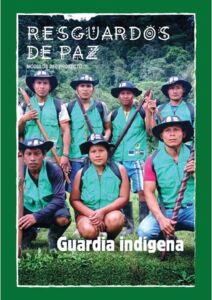
Resguardos de Paz – Módulos del proyecto. Guardia Indígena
Published: no date
Author: War Child Colombia
Una historia de resistencia y protección Guardia Indígena. Acciones para la protección comunitaria, defensa de los derechos humanos y construcción de memoria histórica en comunidades indigenas en los departamentos de Choco y Antioquia, Colombia.
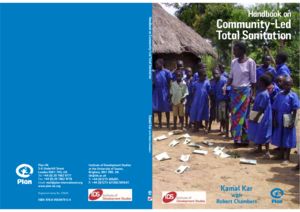
Handbook on Community-Led Total Sanitation
Published: 2008
Author: Kamal Kar with Robert Chambers
A cross sectoral example and guidance for community-led action to improve sanitation.
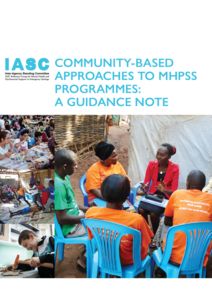
COMMUNITY-BASED APPROACHES TO MHPSS PROGRAMMES: A GUIDANCE NOTE
Published: No date
Author: Inter-Agency Standing Committee’s Reference Group on MHPSS in Emergency Settings
Putting communities at the centre of humanitarian MHPSS response enables self-efficacy, reducing the impact of what is “delivered” and enhancing the significance of what is “built” together.
Building cross-sector collaboration using participatory action research to improve community health in an urban slum in Accra, Ghana
Published: 2018
Author: Jessica Kritz
A cross sector case study. Every urban slum creates challenges too complex for governments to resolve when working alone. Old Fadama, the largest slum in in Accra, Ghana, is home to over 100 000 people. Old Fadama has virtually no water or sanitation infrastructure, contributing to diminished quality of health and frequent cholera outbreaks when the nearby river floods. Our research introduces a model for cross-sector collaboration, supporting stakeholders who wanted to improve community health by installing latrines.
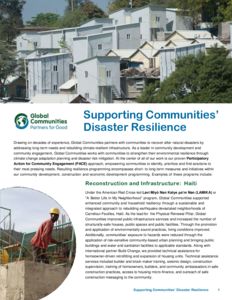
Supporting Communities’ Disaster Resilience
Published: 2018
Author: Global Communities
A cross-sector example from the humanitarian response to disaster affected populations. Global Communities partners with communities to recover after natural disasters by addressing long-term needs and rebuilding climate-resilient infrastructure. It works with communities to strengthen their environmental resilience through climate change adaptation planning and disaster risk mitigation. The approach seeks to empower communities to identify, prioritise and find solutions to their most pressing needs. Haiti, Colombia, Nicaragua, Puerto Rico.

The potential of a community-led approach to change harmful gender norms in low- and middle-income countries
Published: 2019
Author: Beniamino Cislaghi
Many of the programmes that achieve gender norms transformation in low- and middle-income countries are conducted at ‘community’ level. These programmes help people address existing relations of gender and power in their family and broader social networks. There are several programmatic strategies for community-level interventions that transform gender relations. This think piece looks at how community-led approaches can help transform harmful gender norms.
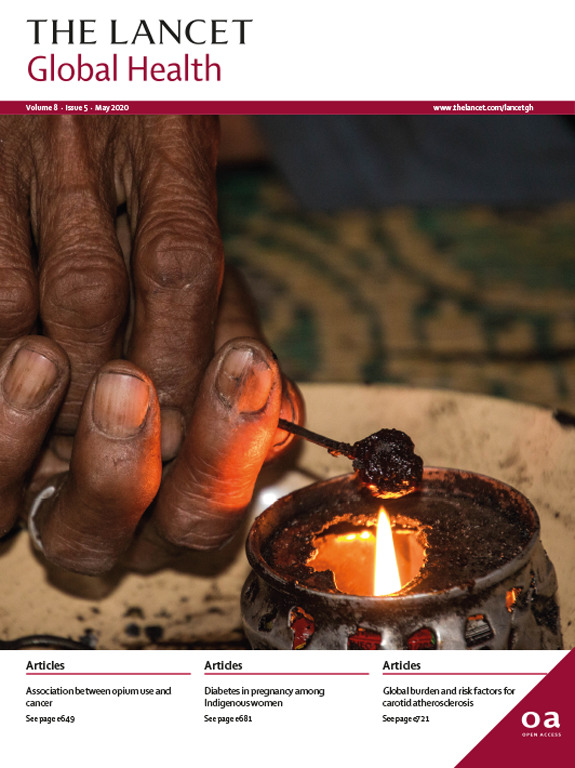
The Lancet Global Health – Social innovation in global health: sparking location action
Published: May, 2020
Author: Beatrice M Halpaap † Joseph D Tucker † Don Mathanga, Noel Juban, Phyllis Awor, Nancy G Saravia, et al. for The Lancet Global Health
“Health innovation is often developed in response to local challenges, fueled from frontline health workers by unique needs and opportunities. Yet the power to scale up innovation is often vested in high-level authorities that have limited understanding of local contexts.
How can innovation in global health be sparked? A growing social innovation in health movement shows that innovation is more effective when it emerges bottom-up from low-income and middle-income countries.
Social innovation in health is a community engaged process that links social change and health improvement, drawing on the diverse strengths of local individuals and institutions. Social innovation argues that having local beneficiaries drive the development of a health programme results in more sustainable and accountable services. This commentary considers social innovation in health, including its history, tools for identifying social innovation, examples of social innovation, unanswered questions, and the next steps.”
The Lancet Global Health is an open source journal which can be read for free by registering on their site.
Operational guidelines: Community-based mental health and psychosocial support in humanitarian settings (field test version)
Published: 2019
Author: UNICEF
The operational guidelines are designed and intended to help UNICEF staff and partners support and promote safe, nurturing environments for children’s recovery, psychosocial wellbeing and protection. The guidelines present an operational framework that emphasizes engaging actors at all levels (children, caregivers, families and community service providers) to design and implement MHPSS strategies that
are locally relevant, comprehensive and sustainable in order to more effectively restore, strengthen, and mobilize family and community supports and systems with the ultimate goal of supporting child and family wellbeing in humanitarian settings.
Community-based protection and mental health and psychosocial support
Published: 2017
Author: UNHCR
A report by UNHCR which seeks to help community-based protection actors and MHPSS practitioners understand the implications of their work for one another’s field of expertise including how they can collectively contribute to the wellbeing and protection of people affected by forced displacement.